 Chowk Paraag Dass, Langer Ghar Gate, Near Golden Temple, Amritsar, Punjab 143001


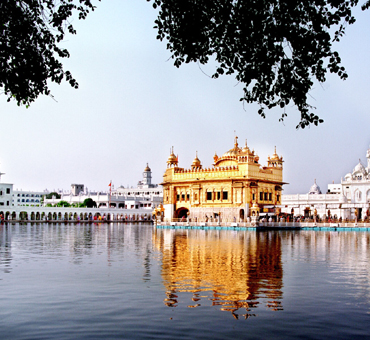
The Golden Temple (also known as the Harimandir Sahib) is a gurdwara located in the city of Amritsar, Punjab. It is the pre-eminent spiritual site of Sikhism. It is one of the holiest sites in Sikhism, alongside the Gurdwara Darbar Sahib Kartarpur in Kartarpur, and Gurdwara Janam Asthan in Nankana Sahib. The Golden Temple is an open house of worship for all people, from all walks of life and faiths. It has a square plan with four entrances, and a circumambulation path around the pool. The four entrances to the gurudwara symbolises the Sikh belief in equality and the Sikh view that all people are welcome into their holy place. The complex is a collection of buildings around the sanctum and the pool. One of these is Akal Takht, the chief centre of religious authority of Sikhism. Additional buildings include a clock tower, the offices of the Gurdwara Committee, a Museum and a langar.
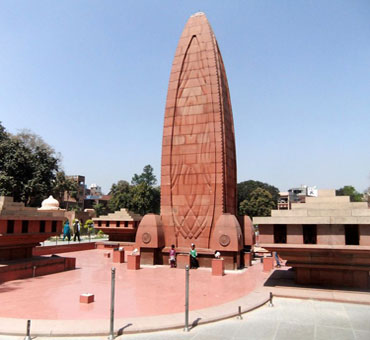
Jallianwala Bagh is a historic garden and memorial of national importance close to the Golden Temple complex in Amritsar, Punjab, India, preserved in the memory of those wounded and killed in the Jallianwala Bagh Massacre that took place on the site on the festival of Baisakhi Day, 13 April 1919. The 7-acre (28,000 m2) site houses a museum, gallery and several memorial structures. It is managed by the Jallianwala Bagh National Memorial Trust, and was renovated between 2019 and 2021.
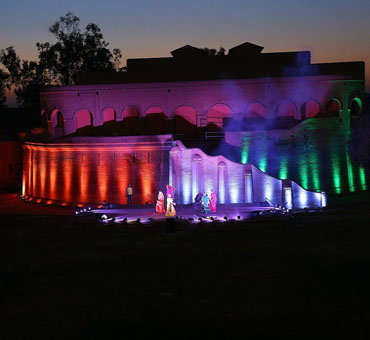
Gobindgarh Fort is a historic military fort located in the center of the city of Amritsar in the Indian state of Punjab. The Fort was until recently occupied by the Indian Army, but was opened to the public on 10 February 2017. Today the fort is being developed as a museum and theme park, as a repository of Punjab’s history. Popularly known as the Bhangian da Killa (fort of the Bhangis) taken away during 18th- century from Bhangi Misl of Dhillon Jats sardars. Maharaja Ranjit Singh conquered Bhangi Misl of Dhillon Jats sardars during 18th-century, and appreciated original name supporting the 10th Sikh guru, Guru Gobind Singh.
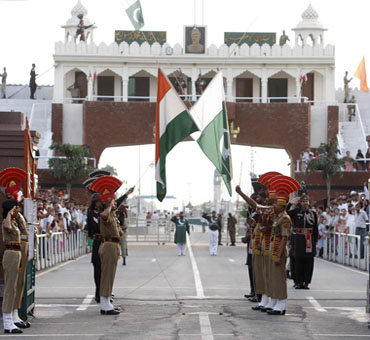
The Wagah border is a post between India and Pakistan. It has become famous for the beating the retreat ceremony which includes the closing of international gates and the lowering of the flags of both the countries. Around 5000 people visit the Wagah border, which has become very popular among tourists all over the world. The flag code of India mandates that the national flag shall be flown only from sunrise to sunset. It is an entertainment ceremony and a highly stylized patriotic display as well as an energetic performance. The guards who perform are chosen carefully among those who have great height, ability to perform and imposing stature. People from both the sides watch the ceremony. The crowd on weekends is heavy and people watch it from the stands. There are certain things that one should remember while visiting Wagah border. There are jammers here so no mobile phone service is available here. No covered bags are allowed, including ladies handbags or purses. There are stalls nearby,to buy food and bottled water.
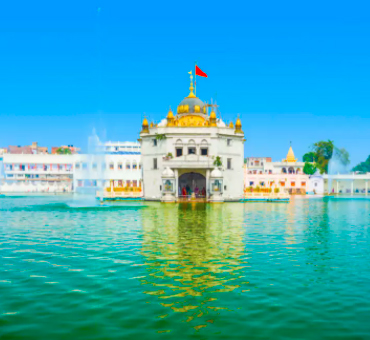
An important Hindu temple situated in the city of Amritsar, Durgiana Temple is devoted to Goddess Durga. It is also known as the Lakshmi Narayan Temple and was built during the 16th century. Similar to the sarovar in Golden Temple, there is also a water tank or lake surrounding the main temple construction. Travel Tip: Try scheduling your visit during the aarti (prayer ceremony) for a truly wonderful experience at this beautiful temple.
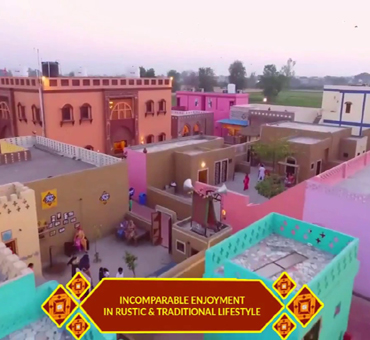
Sadda Pind is the portrait of Punjab. Spread over 12 acres and marked by Punjab's vibrance and tradition, it showcases the lifestyle in a pre-Independence Punjabi village. The village has constructed live brick-and-stone houses of the sunar, kumhar, lohar, kissan, sarpanch, zamindar, nambardar and tangewala. Just like in a PIND, each house features the life of a rural artisan within authentic rustic interiors and celebrates their work. The place, bedecked with vibrant lights and throbbing with Punjabi music all day, glorifies Punjabi folk charms by presenting the talents of traditional local artists. The harmonious and musical culture of Punjab is displayed in the baraat ghar and the village haveli, where folk songs and dances are performed all day. The display of folk dances like bhangra, jhumar, kikli and gidda, and musical instruments like nagara, gagar and tumba represent the endless energy of Punjab. Every day, guests are invited to participate in spirited and musical sangeet, jaago and baraat processions around the resort. In addition, visitors can watch stunning performances of magicians, gatka (Sikh martial arts) and stuntsmen in a Maut Ka Kuan, compete in mela games like archery, bowling and balloon shooting, and ride on horse carts and camel carts.
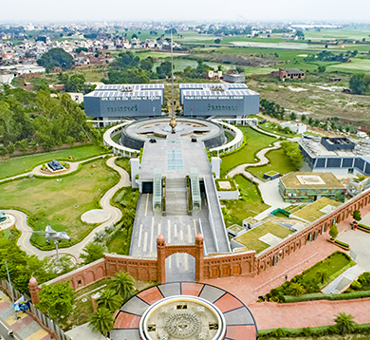
The project is named as "Punjab State War Heroes Memorial & Museum". Its attraction is 45 meters high Sword erected in the central vista of the museum having 8 galleries depicting the sacrifices and heroic deeds from the period of Guru Hargobind Singh Ji to the period of Maharaja Ranjit Singh and up to the till Kargil operations: 1. Gallery 1- Orientation and Antiquity. 2. Gallery 2- Guru Hargobind Ji till rise of Sikh Empire. 3. Gallery 3- The Sikh Empire And Anglo-Sikh Wars. 4. Gallery 4- British Rule up to Partition (1846-1947). 5. Gallery 5- J&K Ops 1947-48. 6. Gallery 6- Indo China War 1962. 7. Gallery 7- Indo-Pak Wars (1965-1971) and OP Pawan/OP Cactus. 8. Gallery 8- Kargil War 1999.